
Challenging genre norms
Boosting appeal with real-world concepts
Good morning.
This week I examine the risk and reward of challenging established genre norms, look at how creating a game based on real-world concepts can boost appeal, and dive into the emerging opportunity around taking a hardcore genre and making it cozy.
Challenging genre norms
Since Steam introduced tags in 2014, they have become a key feature for game discoverability among players and developers alike. Tags on Steam are used to specify a game’s genre including top level categories like Adventure, RPG, and Simulation along with more specific categories like Battle Royale, City Builder, and Roguelike. They’re also used to identify even more specific subgenres like Creature Collector, Looter Shooter, and Souls-like as well as themes and moods as wide ranging as Dinosaurs, Noir, and Relaxing.

Periodically, Steam creates new tags to capture emerging categories that have enough interest and attention behind them, but don’t fit within existing tags. Last year they added the tags Dice, Boomer Shooter, Dwarf, and Elf. All in all, there are over 450 tags on the platform. With all those tags available, players, and sometimes developers, can mis-tag a game. As Steam explained shortly after they first launched the feature:
Tags can be a good indicator of when there is a mismatch between how you perceive your game, and how your game is perceived by customers.
Getting your tags right is simple, but important. Not only do tags give players a sense of what they can expect from your game, they’re also used by Steam’s recommendation algorithm all across the platform. One of those places is the “More like this” carousel, which can drive significant traffic to your game’s page. From Steam when this feature first launched in 2014:
If you visit a product page for a game on Steam, you’ll notice a section just above the reviews called “More like this”. With the addition of tags, we can better figure out which games are most closely related thematically and stylistically. As a result, the amount of traffic through the ‘More like this” section of the product page has tripled, which indicates to us that customers are finding those suggestions much more relevant.
Now, imagine you’re an indie developer (this shouldn’t be too hard for you, my dear reader). You’ve been hard at work on your latest game and you’re ready to start marketing it. First step: a store page on Steam. You upload your capsule art, put the finishing touches on your description, and add some tags that seem right for the kind of game you’re making. You submit your page for review. A few days later, Steam approves it and it’s live! Hooray, time to share it with the world.
You visit your page and scroll to the “More like this” section, curious to see what other games the Steam algorithm is recommending to shoppers. You see the following:
The latest game in a 20-year-old AAA franchise that was launched exclusively on PlayStation 5 and sold 5.1 million copies within its first week.
A remake of a game from 1997 which was voted “Best Game Ever” by users of GameFAQs in 2004 and 2005.
A remaster collection for a franchise that includes the world’s most recognizable characters owned by one of the longest-running and most successful media companies.
A game based on a book and subsequent movie franchise that is the 8th highest grossing media franchise of all time at $34.7B, sitting just above the Marvel Cinematic Universe at $34.3B.
Talk about stiff competition.

Unless you’re working on the latest AAA action adventure game set in a fantasy world, your “More like this” carousel should definitely not look like this. If it does, it’s a sign of one of the following:
Your tags aren’t specific enough
Your game isn’t specific enough
The former is easy to fix: just think about the games that are most similar to yours and copy their tags. The latter can signal a deeper problem.
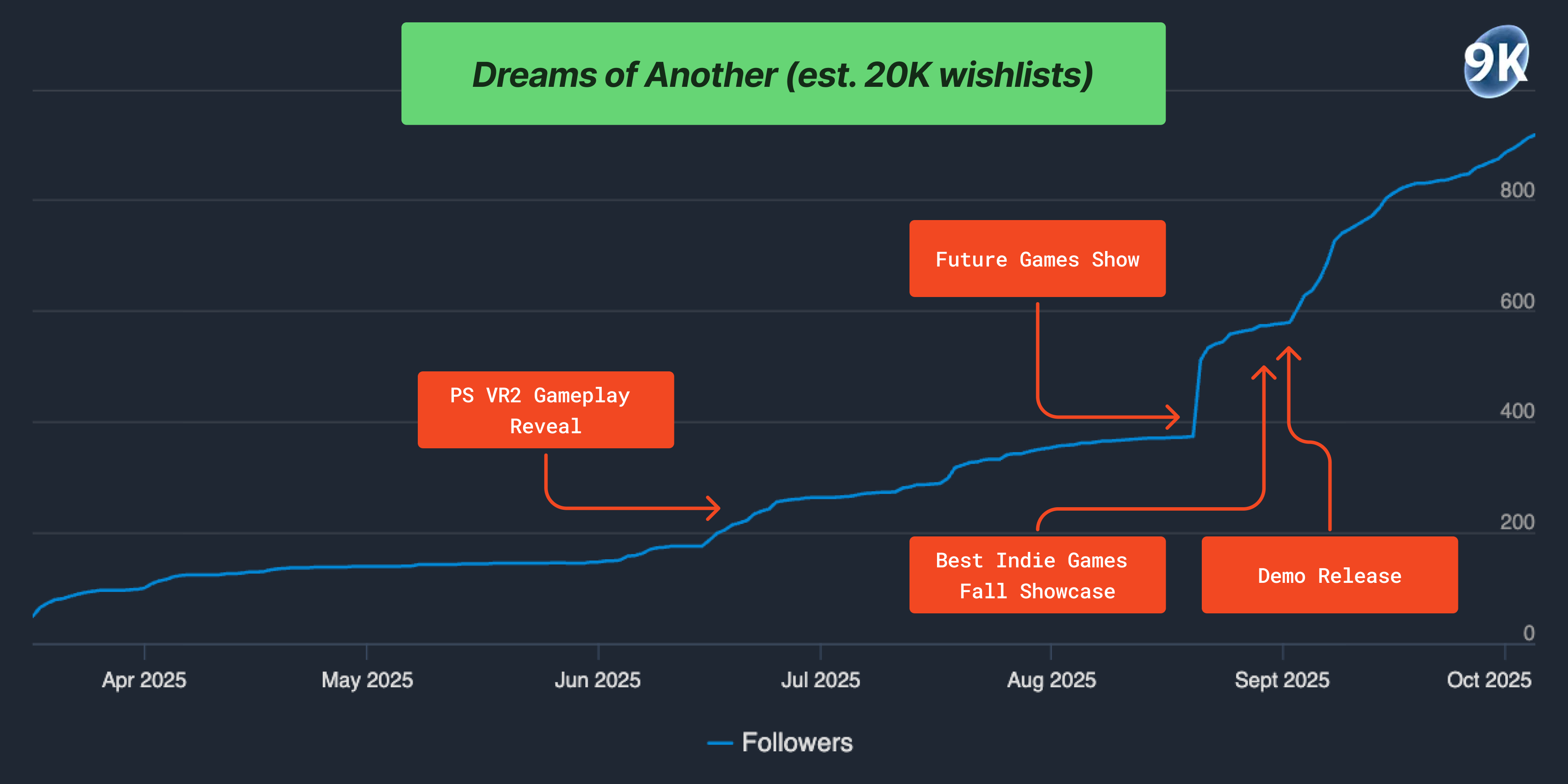
The screenshot above is from the Steam page for upcoming title Dreams of Another (releasing October 9th with 19K wishlists). A post on the PlayStation blog by Baiyon, the Creative Director of Q-Games and developer of Dreams of Another, describes the game saying:
[Dreams of Another is a] philosophical and allegorical gaming experience where shooting creates rather than destroys.
Reading this description, the first comparable games that come to mind are certainly not the big budget hits like God of War, Final Fantasy, Kingdom Hearts, or Hogwarts Legacy. But come to think of it, there really aren’t many games that are “more like” Dreams of Another, and that seems to be by design. Baiyon’s description continues:
Piece together the interwoven stories in this unconventional game that challenges common tropes and invites players to understand not just the game, but their own life in a whole new light.
“Challenging common tropes” is an honorable effort, but doing so presents you with an even greater challenge: properly positioning your game on Steam. Paradoxically, the less similar your game is to other games on the market, the harder it can be to market your game. It can be especially difficult to understand when you’ve crossed the threshold between “unique enough to stand out” and “so esoteric that you fail to break through”. If you’re going to make something intentionally unconventional, it’s worth thinking carefully about how potential players will discover your game. The least you can do is optimize your “More like this” results on Steam.
Taking inspiration from the real world
Basing a game around a theme or common object from the real world can be a good strategy for boosting appeal. A recent example of this can be seen with the roguelike claw machine deckbuilder Dungeon Clawler (2,786 total reviews). The team, known as Stray Fawn, developed a prototype for the game on the side while working on their city builder The Wandering Village (6,338 total reviews). They were inspired by the few roguelike deckbuilders at the time that incorporated physics-based gameplay like Peglin (15,416 total reviews). After a trip to Japan where the team spent hours playing claw machine games in arcades they revisited the prototype and expanded it into a full release. Studio head Philomena Schwab explains why they set out to make a game based on a claw machine in an excellent interview with Jonas Tyroller:
Yeah, that’s also something Gavin [Eisenbeisz], the Choo-Choo Charles developer, talked about a lot—combining things that are already proven—but they don’t have to be proven in games particularly, right? They can be proven things from other media. They can be proven in the real world to some capacity. So, I feel like using claw machines is kind of that route. You’re taking something that has been proven to work well in the real world and you port part of it to a game. And then you combine it with a genre that’s already working well.
Balatro developer Localthunk has similar reasoning as to why he chose to build his game around known poker mechanics. In an interview on Game Developer he explains:
“I think there’s a contingent of people more willing to interface with a game if it’s talking about blinds, discards, and all these [poker] words,” said LocalThunk. “It was like an onboarding tool, a coat of paint to make this seem approachable for a particular audience.”
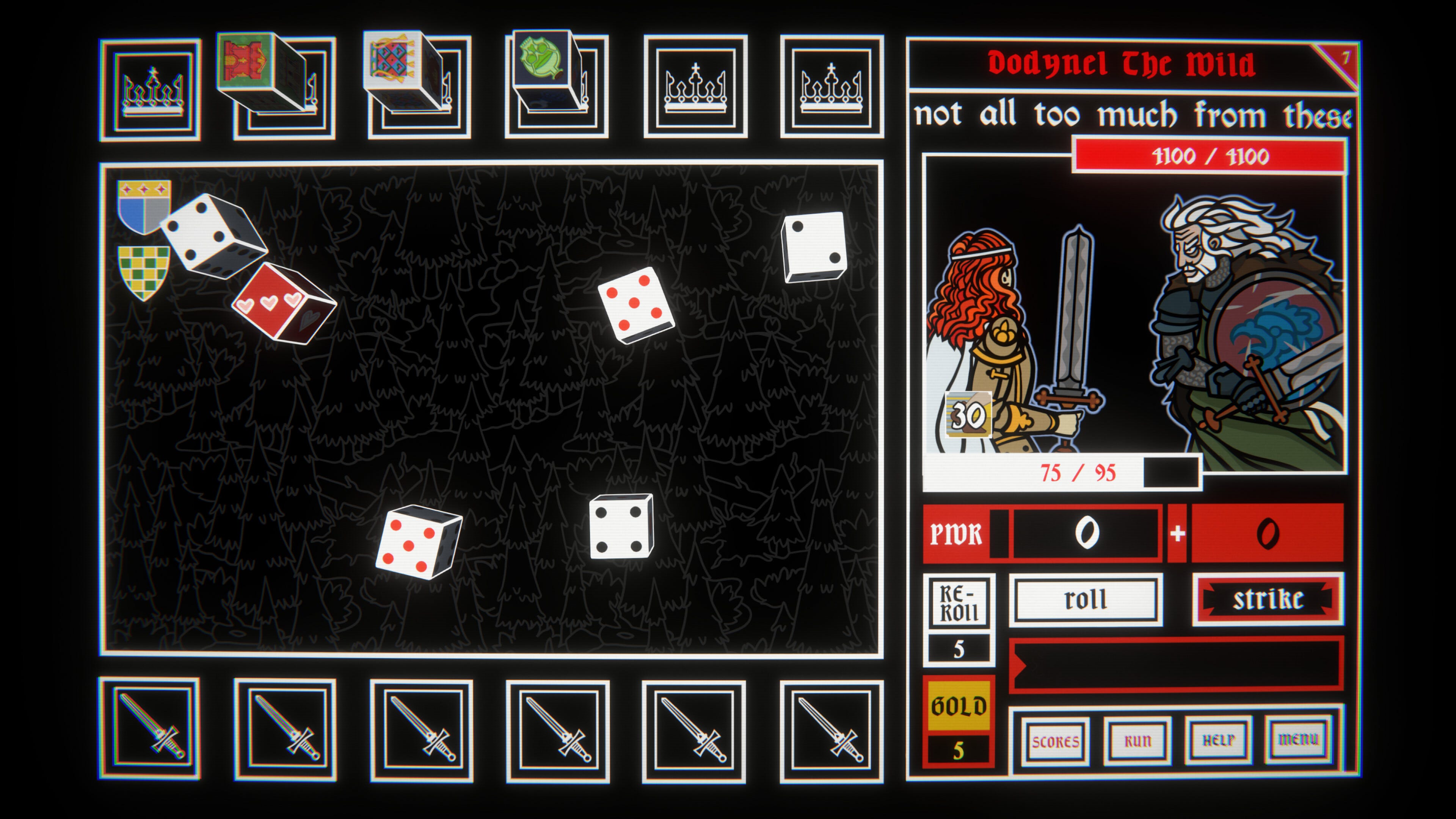
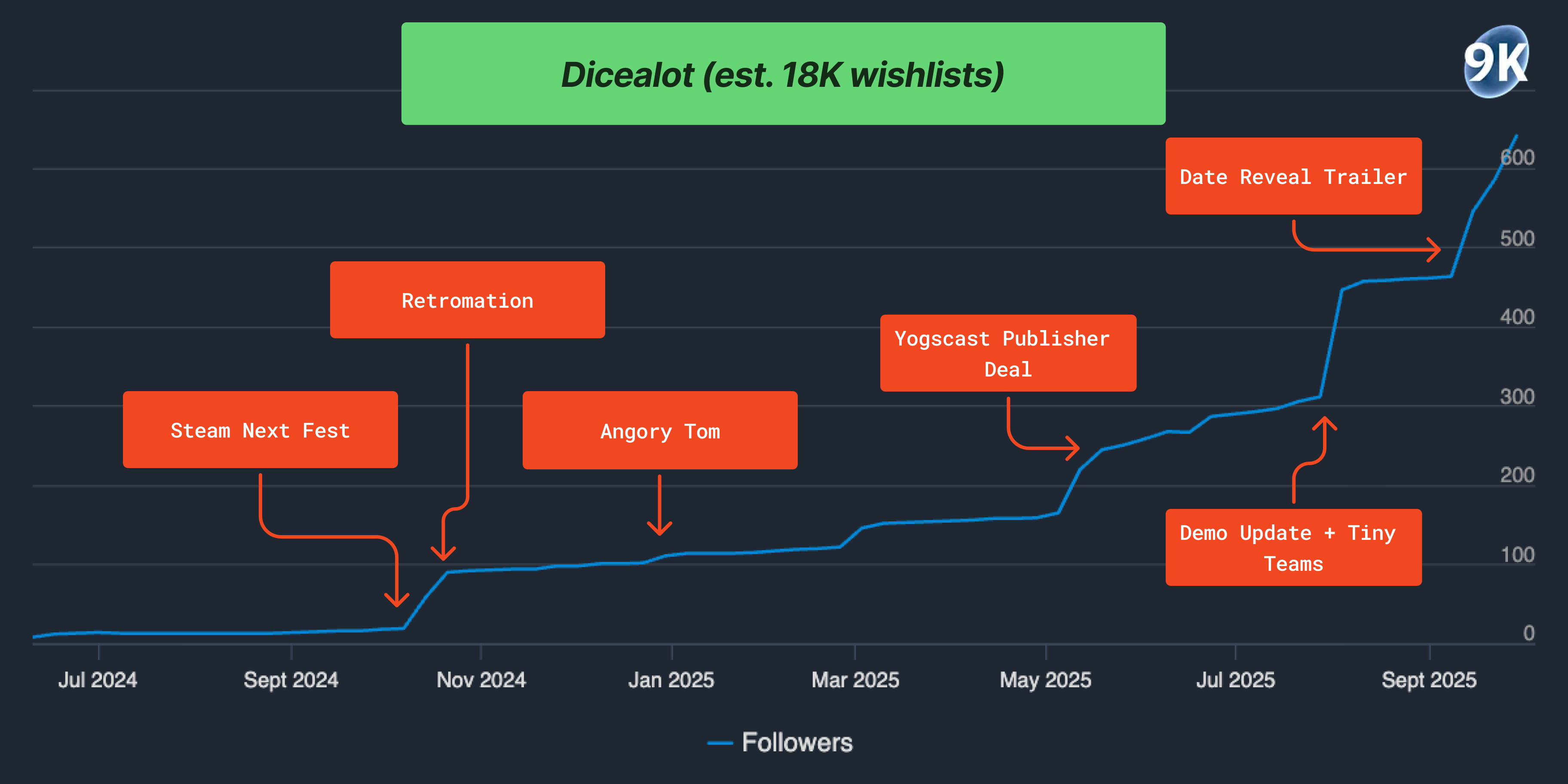
The so-called dicebuilder is an emerging microgenre that similarly takes inspiration from the real world. In this case…dice. Upcoming roguelike dicebuilder Dicealot (releasing October 8th with 18K wishlists) deploys a CRT TV video poker art style reminiscent of Balatro, but is structured more like a dungeon crawler with Farkle-inspired combat. Retromation, a popular roguelike YouTuber, played the demo during Steam Next Fest in October last year and opened his video saying “it seems to be a mix between Balatro and Farkle”. Retromation’s ability to describe the core appeal of the game in one sentence is a testament to thoughtful design and positioning by Dicealot developer goodviewgames.
See also: Other dice games Slice & Dice, Dicey Dunegons, Dice & Fold, Astrea, SpellRogue, Circadian Dice, One Deck Dungeon, Dice Legacy, Roll, and DICEOMANCER.
Take a hardcore genre and make it cozy
As Chris Zukowski has covered on his blog numerous times, the types of games that perform best on Steam are of the “crafty buildy strategy simulation” variant. Players on Steam generally prefer games with deep interconnected systems and endless hours of emergent gameplay. Factorio (109,186 total reviews) is a perfect example of this. Despite never going on sale it continues to sell extremely well because it hits that crafty-buildy sweet spot that PC gamers love.
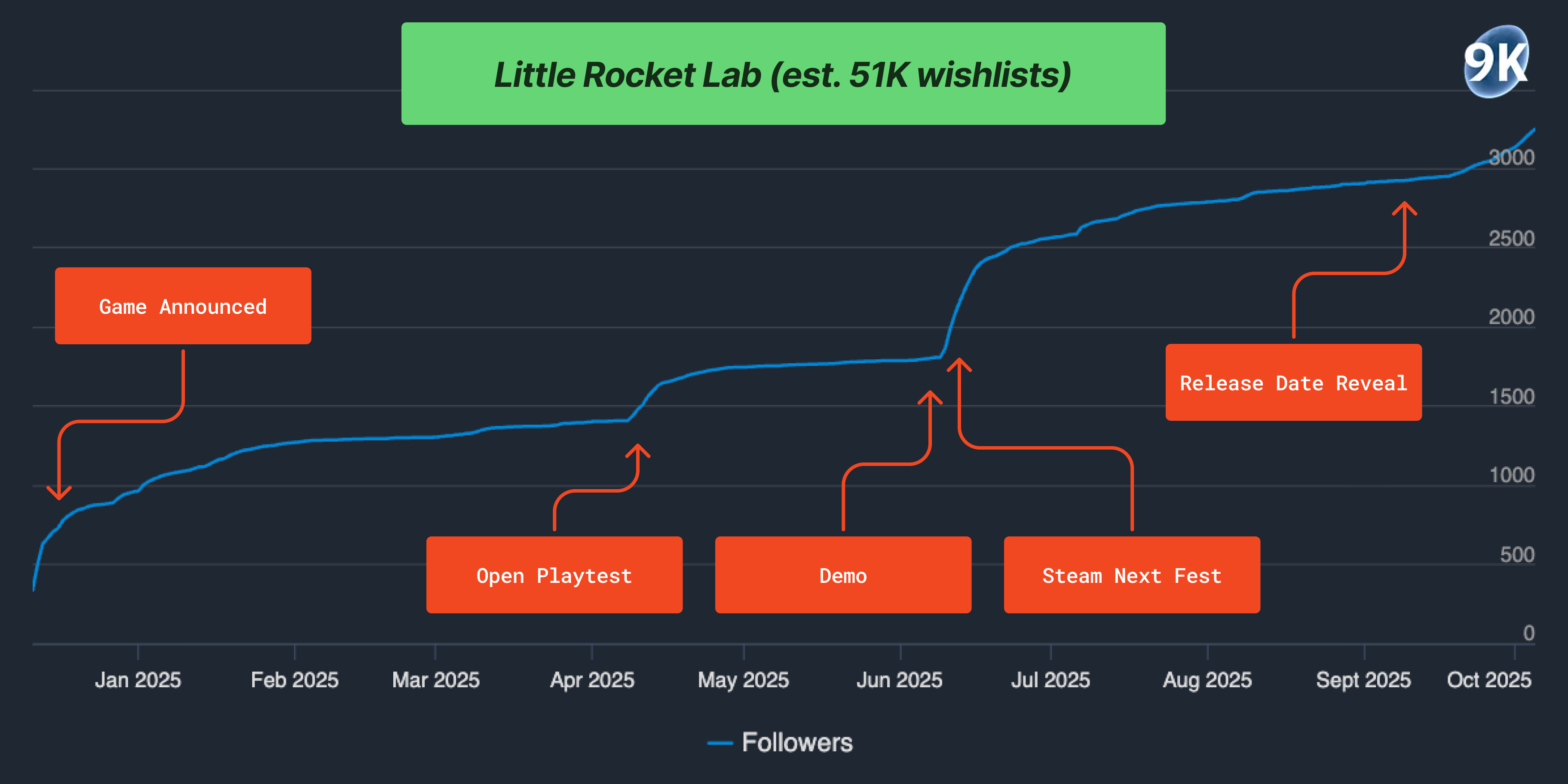
Upcoming game Little Rocket Lab (releasing October 7th with 49K wishlists) presents us with a compelling strategy for differentiation within this market: going cozy. You can guess exactly what you’re getting just based on the name of the game: “little” denotes cozy and “rocket lab” brings to mind deep systemic automation mechanics like those found in Dyson Sphere Program (23,363 total reviews).
You play as Morgan, an aspiring engineer headed home to complete your family’s dream project - a rocket ship! Finding home not quite how she left it, Morgan will need to research and build clever contraptions and sprawling factories to help the locals. From simple drills and furnaces to complex assemblers, cranes and miles of conveyor belts, you’ll convert local resources into useful materials and bring industry back to sleepy St. Ambroise.
As this description from the Steam page for Little Rocket Lab illustrates, going cozy isn’t about simplifying or dumbing down a game for a more casual audience. Rather, it’s about re-theming gameplay systems that have already been proven to work. The Steam page for Factorio and Little Rocket Lab share the following terms:
automation
belts
complexity
crafting
factories
industry
machines
mechanical
mining
research
resources
robots
This is no accident. Teenage Astronauts, the developers of Little Rocket Lab, clearly understand how to make their game appealing to fans of other games in their chosen genre. Embrace genre tropes and players will connect the dots themselves.

Finally, let’s look at the three games I covered (behind the paywall) a month ago and see if their wishlists ended up converting to strong sales figures within the first month of release:
Asteroid base-builder by popular YouTuber kurzgesagt Star Birds had an estimated 338K wishlists before launching into early access on September 10, 2025. It was priced at $19.99 and reached 1,437 reviews with a review score of 93% positive in the first month. The game has an estimated gross revenue of $1.3M. My evaluation: a definitive hit.
Incremental train-builder Trainatic had an estimated 26K wishlists before launching on September 8, 2025. It was priced at $5.99 and reached 524 reviews with a review score of 91% positive in the first month. The game has an estimated gross revenue of $205K. My evaluation: a definitive success.
Meme-inspired point and click The Trolley Solution had an estimated 39K wishlists before launching on September 12, 2025. It was priced at $9.99 and reached 322 reviews with a review score of 80% positive in the first month. The game has an estimated gross revenue of $73K. My evaluation: a moderate success.
Thanks for reading and have a great week.