
How do you break through on Steam?
The solution might be to increase your surface area for luck
Good morning and happy Steam Next Fest week.
It’s as good a time as any to ask: why do so many games fail to break through on Steam? The answer, in some ways, is simple. There are between 24 to 37 million players on the platform at any given time, but only a very small percentage of those players buy more than one game per month. According to research by Mat Piscatella of Circana:
Hyper enthusiast, price-insensitive players are really keeping things going, especially in the non f2p gaming space. According to Circana’s Q3 2025 Future of Games, only 4% of US video game players buy a new game more often than once per month, with a third of players not buying any games at all.
Steam is clearly aware of this dynamic. The parameters of the Steam algorithm aren’t public, but it would be a good bet to say the algorithm is designed with these “hyper enthusiast, price-insensitive players” in mind. Steam takes 30% of every sale, so the more games that succeed, the more money Steam makes. Steam and game developers have the same goal, we both want our games to sell more copies.
According to Chris Zukowski’s yearly research, the number of indie and AA games that succeed (reaching HTMAG’s benchmark of 1,000 reviews) on Steam has grown steadily along with the total number of games released. Although, the percentage of games that succeed each year is shrinking slightly:
2022: 337 games reached 1,000+ reviews out of 12,304 total games (2.74%)
2023: 354 games reached 1,000+ reviews out of 13,834 total games (2.56%)
2024: 445 games reached 1,000+ reviews out of 18,239 total games (2.44%)
That’s a lot of games. Why exactly were over 17,000 of them from 2024 commercial failures? There are a few obvious reasons. A good number of these games are hobby projects that never had the goal of reaching a wider audience. Others were made by first time developers that didn’t quite reach an expected level of quality within their respective genres. And many others didn’t follow necessary discoverability steps including releasing a demo and sharing it with YouTubers and Twitch streamers—this week only 21% of new releases have a demo.
But what about all the other games that were well made, released a demo, and followed marketing best practices as recommended by HTMAG, GameDiscoverCo, and others. Why did those games fail? At first glance, it feels like impossible question. The common refrain is…it all comes down to luck. Games are more of an art than a science after all and some games just have “the magic”. There’s no real way to tip the scales in your favor.
I disagree wholeheartedly. I believe it’s possible to increase your surface area for luck as Cate Hall explains in her essay:
One distinguishing feature I’ve noticed among people who are unusually successful is that they just try a lot of stuff — socially, intellectually, professionally. It’s the rate of experimentation, the number of shots on goal, that provides the magic, not the percentage of successes, which might be very low at first.
It sounds stupidly simple, but it’s profound: the more times you interact with the outside world, the more chances you have to get lucky — to find the collaborators, friends, and projects that, together, provide the right soil for you to bloom in.
For game developers, this translates to a couple tasks in particular: make more games and closely study the market. Doing so will increase your surface area for luck, and in turn boost the chances that you’ll make something that hits amidst the crowded sea of indie games on Steam. Some of the most successful indie developers understand this well. Gavin Eisenbeisz, developer of Choo-Choo Charles, says he spent 6 months doing market research before ultimately setting out to create the upcoming co-op prison break game CUFFBUST (releasing October 15th with 241K est. wishlists).
There are one to a few hundred premium-priced games released on Steam every week. I view the Steam pages for each and every one (so that you don’t have to). This week, I provide analysis on three upcoming games that broke far beyond the 10K wishlist barrier (roughly the number of wishlists you’ll need to appear on Steam’s coveted popular upcoming section on the homepage). I also look at three games that failed to reach this 10K wishlist threshold (2.8K, 2.2K, and 216 wishlists respectively). As Stephen King outlines in his book On Writing, we can learn just as much from the flops as we can from the hits:
If you want to be a writer, you must do two things above all others: read a lot and write a lot. There’s no way around these two things that I’m aware of, no shortcut. I’m a slow reader, but I usually get through seventy or eighty books a year, mostly fiction. I don’t read in order to study the craft; I read because I like to read. It’s what I do at night, kicked back in my blue chair. Similarly, I don’t read fiction to study the art of fiction, but simply because I like stories. Yet there is a learning process going on. Every book you pick up has its own lesson or lessons, and quite often the bad books have more to teach than the good ones.
Let’s get into it…
Probable Hits
What can we learn from these games that reached 10K wishlists and far above?
Escape from Duckov
Estimated wishlists: 470K
Release date: October 15, 2025
Steam page created: 15 months ago
Demo info: Released in January and May 2025 / No available review data, demo store page was taken down by the developers
A single-player top-down looter-shooter game. Loot, escape, build, and eventually become a mighty bird soldier. Beware! If you are knocked down, items in your inventory will be lost! But don’t worry. With your infrastructure built nicely, you will rise again soon.
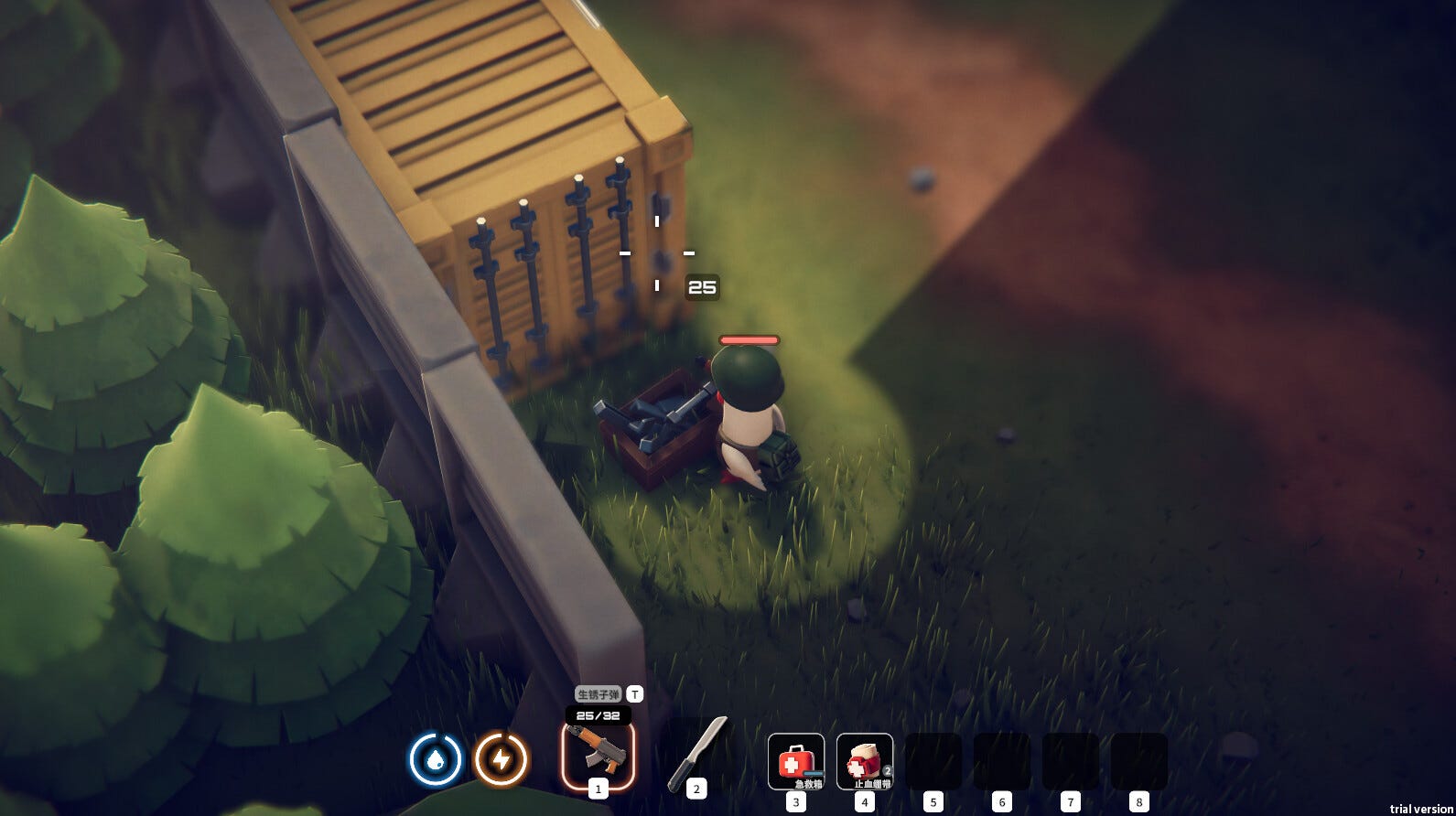
Escape from Duckov is brilliant from a games discoverability perspective. It unabashedly rips the proven extraction formula popularized by Escape from Tarkov, strips out the multiplayer, and replaces the hyper-realistic gritty art style with colorful low poly environments and cartoon ducks.
An article covering the Escape from Duckov demo published in GamesRadar earlier this year claimed the extraction shooter genre is oversaturated saying: “I’m no massive fan of the extraction shooter, but I know that what Escape From Tarkov has achieved in a genre that’s become so crowded as to be almost cursed is nothing short of remarkable”. Games journalists are quick to claim that emerging genres are oversaturated. They do it all the time. Don’t listen to them! They’re wrong. In fact, the extraction shooter genre is one of the least oversaturated and best performing genres on all of Steam. There are just 155 extraction shooters on Steam in total. The genre has a median gross revenue of $21K and 39% of extraction shooters have grossed over $100K. For comparison sake, there are 12,280 2D platformers on Steam. The genre has a median gross revenue of $230 and just 4% of 2D platformers have a median gross revenue over $100K.
Given the clear undersaturation of the genre, we’re bound to see many more games morph and expand on the extraction framework. Recent examples include SULFUR (2,932 reviews) which fuses extraction mechanics with roguelike progression systems, Deadly Days: Roadtrip (1,519 reviews) follows a survivor-like structure, and ZERO Sievert (7,336 reviews) strips things down even further by bringing a pixelated top-down perspective to the Tarkov format.
Team Soda, developer of Escape from Duckov, had a unique strategy when it came to releasing the demo for the game. They had two time-limit demo releases, one from January to February and another from May to July corresponding with Steam Next Fest. IGN featured 24 minutes of gameplay coinciding with the first demo release in January and then featured a trailer on their YouTube channel in May which racked up 450K views. Both of these demo releases resulted in a big spike in wishlist additions.
Undusted: Letters from the Past
Estimated wishlists: 81K
Release date: October 12, 2025
Steam page created: 17 months ago
Demo info: Released May 16, 2024 / 126 reviews / 95% positive
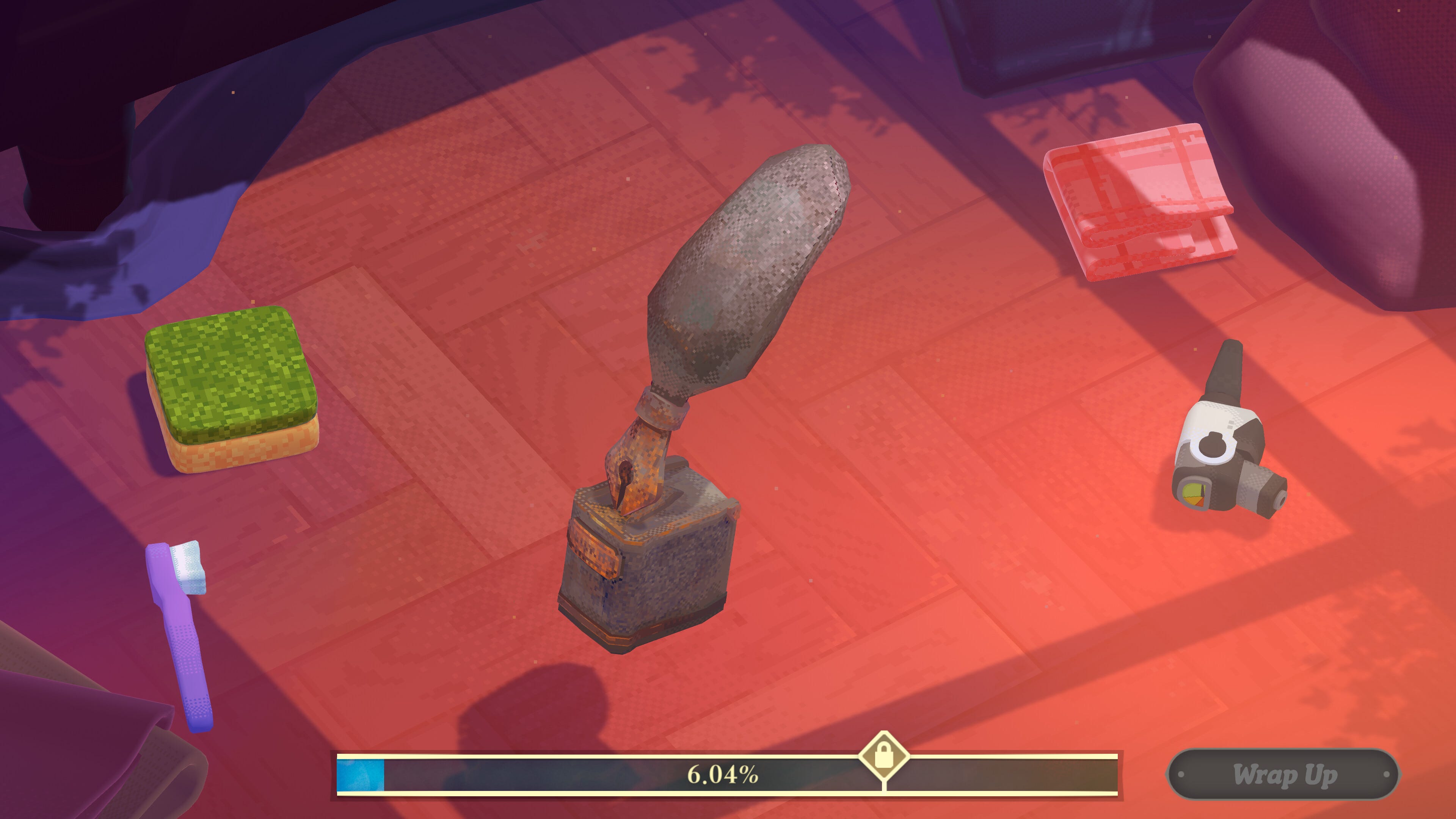
Undusted: Letters from the Past is a casual game in which you clean and restore dirty items. What is her story as she returns to a long-neglected house? Enjoy the satisfying audiovisuals featuring sensually designed sounds and graphics.
The cleaning sim microgenre has taken many forms. There’s job simulators like Crime Scene Cleaner (11,446 reviews) and the meditative PowerWash Simulator (36,480 reviews), there’s absurd gore cleanup games like Viscera Cleanup (10,075 reviews) and recently announced Kaiju Cleanup, and there’s cozy organizing games like Unpacking (21,003 reviews) and recently released Whisper of the House (982 reviews).
Undusted is situated within a subcategory of object cleaning/repair games that includes Trash Goblin (886 reviews) along with Assemble with Care (4,215 reviews). The core appeal of these games is in the cozy ASMR-feel of the cleaning/repair mechanics. In Undusted you use brushes, sponges and cloths to wipe away grime and reach a required threshold on a progress bar. The game is broken up into chapters with each one revealing more about the main character’s relationship with her deceased mother. This focused and tactile gameplay paired with a heartfelt narrative is a proven formula within cozy games.
The game was announced in Wholesome Direct 2024 with a demo released on May 16, 2024 (126 reviews at 96% positive). It was developed by Seoul-based 5minlab Corp who made the PVP action brawler SMASH LEGENDS (2,815 reviews). 5minlab was acquired by Krafton, owner of the studios behind PUBG (2.6M reviews) and Subnautica (294K reviews), in 2022 for $19.9M. While the team had the backing of a big company, the game still represents a format that’s replicable and approachable for other self-funded indie teams setting out to make cozy games.
BALL x PIT
Estimated wishlists: 251K
Release date: October 14, 2025
Steam page created: 39 months ago
Demo info: Released June 6, 2025 / 1,483 reviews / 96% positive
BALL x PIT is a brick-breaking, ball-fusing, base-building survival roguelite. Batter hordes of enemies with ricocheting balls and gather the riches of the pit to expand your homestead, generate resources and recruit unique heroes.
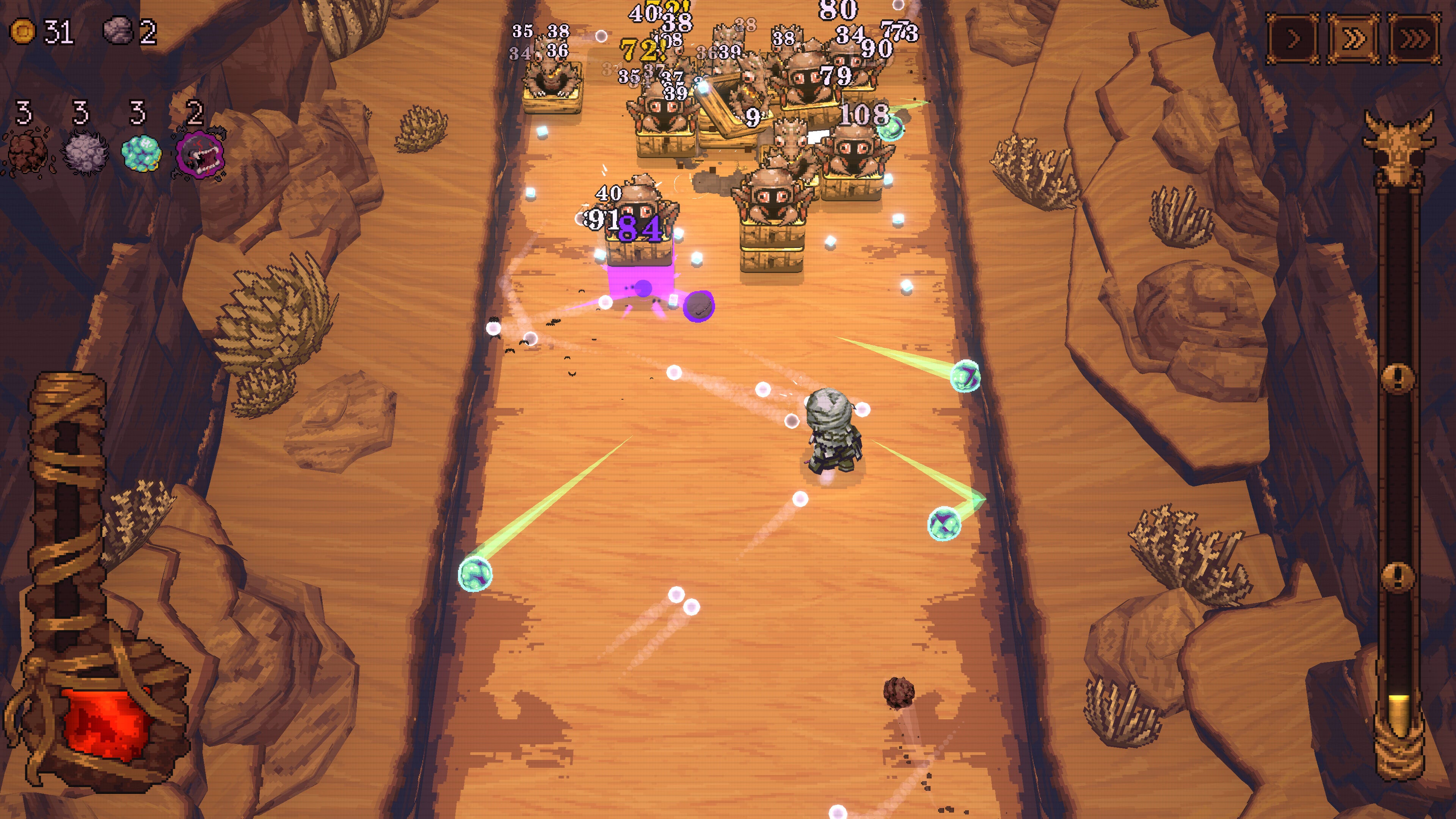
At first glance BALL x PIT looks like an ad for one of those mobile games that doesn’t actually exist. It almost feels like a pixel art version of the spoof game YEAH! YOU WANT “THOSE GAMES,” RIGHT?… (1,177 reviews). This is probably in part due to its top down vertical runner format that’s seen in hit mobile games like Count Masters: Crowd Runner 3D or Tall Man Run. But look just beyond the surface and it becomes clear that BALL x PIT is an impressive fusion of deep gameplay systems and proven subgenre tropes. It combines the bullet heaven chaos of Vampire Survivors with the retro physics of the 1976 arcade game Breakout and the action/base-building core loop that worked especially well in games like Cult of the Lamb (52,334 reviews) and Loop Hero (15,564 reviews)
Devolver Digital, famed publisher behind BALL x PIT, showcased a promo video during Summer Game Fest 2025 that can be seen on their YouTube channel that highlights the goofy origins of the game. The game was developed by a core team of 7 led by Kenny Sun, creator of the roguelite platformer Mr. Sun’s Hatbox (380 reviews) and “circular” platformer Circa Infinity (230 reviews).
The demo has performed exceptionally well on Steam reaching 1,481 reviews at 96% positive. One review exclaims: “This game proves anything can be turned into a rougelite, and with the right execution, will be an absolute gem of a game!”
The game builds upon the long proven breakout-style physics gameplay following a similar formula of as other physics-based roguelike/lite games like Peglin (9,488 reviews), Dungeon Clawler (1,733 reviews), and Ballionaire (1,903 reviews). This approach can be a winning one as Philomena Schwab, co-creator of Dungeon Clawler, explains in her recent interview with Jonas Tyroller (I highlighted last week, but it’s worth repeating):
“Yeah, that’s also something Gavin [Eisenbeisz], the Choo-Choo Charles developer, talked about a lot—combining things that are already proven—but they don’t have to be proven in games particularly, right? They can be proven things from other media. They can be proven in the real world to some capacity. So, I feel like using claw machines is kind of that route. You’re taking something that has been proven to work well in the real world and you port part of it to a game. And then you combine it with a genre that’s already working well.”
Notable Stragglers
These games are launching with estimated wishlists lower than the desired threshold of 10K. Why did they fail to break through before launch and what can we learn from them?
Luminastadt
Estimated wishlists: 216
Release date: October 15, 2025
Steam page created: 18 months ago
Demo info: Released March 29, 2025 / No available review data, demo store page was taken down by the developers
It is a non-objective sandbox builder. Build in a procedurally generated world. No management, no combat, no goals, no objectives, no points.
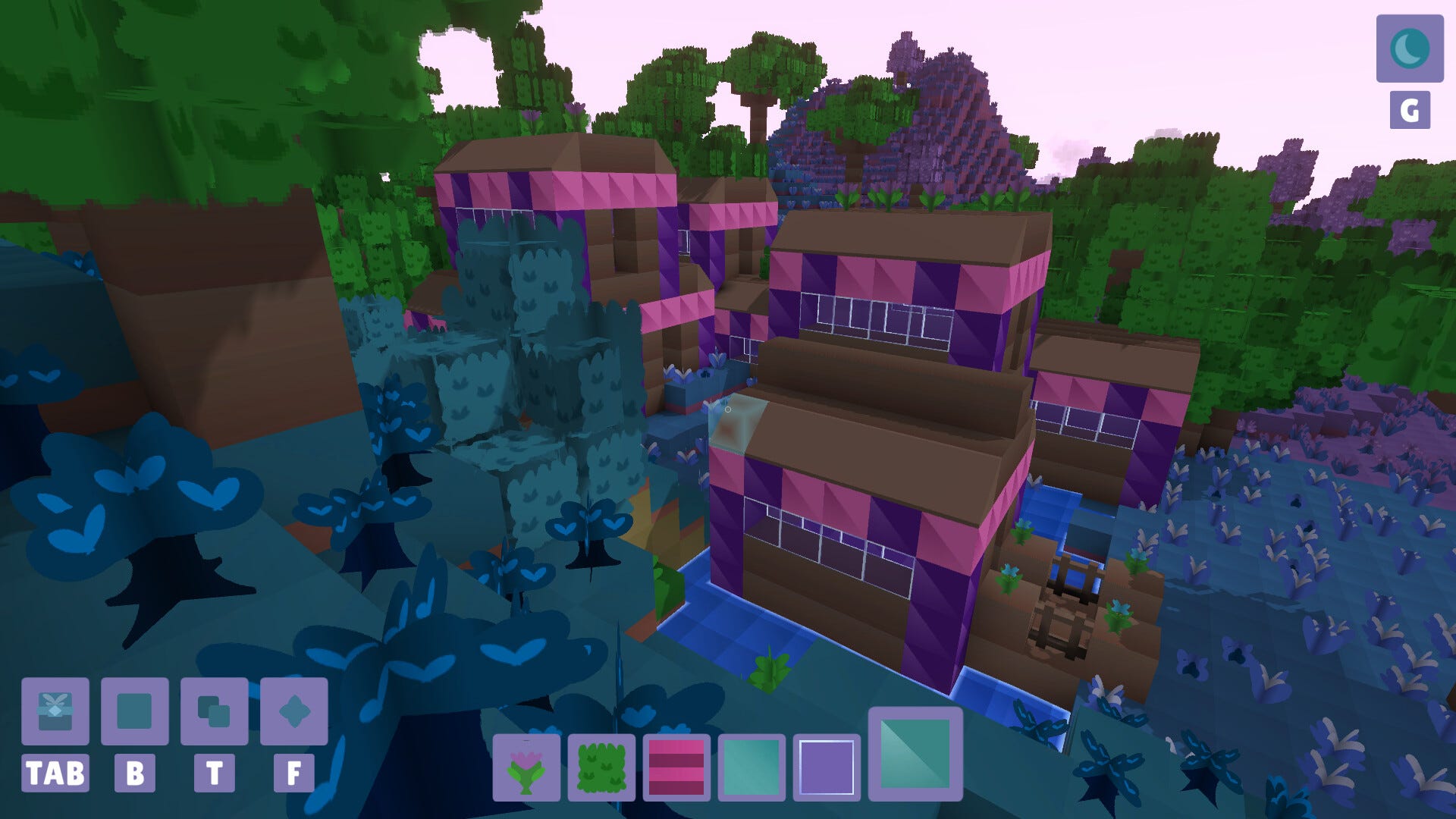
The game is described as “a non-objective sandbox builder” with “no management, no combat, no goals, no objectives, no points.” I don’t think that listing all the things your game is lacking is a strong positioning strategy. Instead, focus on the core actions players take in your game and highlight why they’re appealing. You want to drawn potential players in so they come away from reading your description thinking “that sounds like I game I might want to play, I’d like to learn more”.
If you set out to make a voxel-based sandbox game, you’re inevitably going to be compared to Minecraft. In order to breakthrough, you must answer the question: why should I play this instead of Minecraft? The answer to this question needs to grab potential players at first glance. Some games have found success in drawing inspiration from Minecraft: Trove (42,213 reviews) features epic co-op combat, Creativerse (1,341 reviews) attempted to make building more accessible with sharable blueprints, and Boundless (1,604 reviews) brings you to space.
Luminastadt developer Markus Korda released a demo for the game on March 26, 2025 but, according to SteamDB, it received little attention peaking at just 1 concurrent player. There are no videos about the game on YouTube even from smaller creators.
The developer has previously released seven PS1-style psychological horror / walking simulator games since July of last year. None of them have received more than 10 reviews.
Dead Oil
Estimated wishlists: 2.2K
Release date: October 16, 2025
Steam page created: 6 months ago
Demo info: Released May 26, 2025 / No available review data, demo store page was taken down by the developers
Defend your armored rig against ruthless raiders in this intense roguelike survival driller. Extract precious Oil, scavenge resources, and upgrade your rig. Is there enough time to drill a little deeper and reinforce your rig before the raiders launch their next attack?
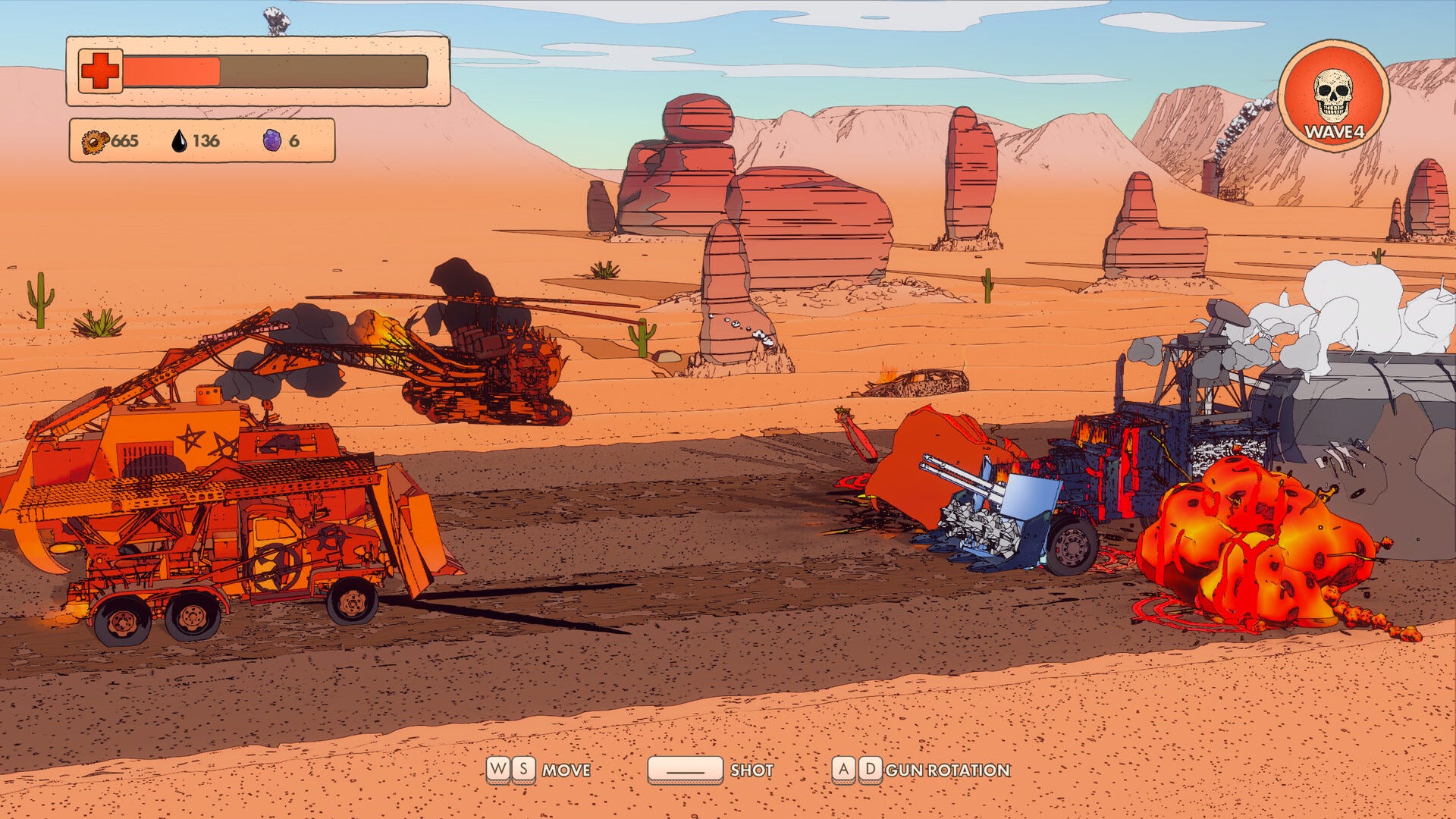
The trailer for Dead Oil clearly communicates a Dome Keeper-inspired core gameplay loop: drill for resources to upgrade your truck so you can defeat increasingly more powerful enemies.
The demo was showcased by popular roguelike and strategy game YouTubers including Idle cub (35K views) and Real Civil Engineer (363K views), but those views haven’t converted to especially strong wishlist numbers. It seems unlikely that the game will reach the popular upcoming tab on the front page of Steam before launch.
The Mad Max and Moebius-inspired art style is appealing, but the game’s concept feels a little flimsy to me. Why are these eighteen-wheelers drilling for oil? One YouTube comment also mentions the odd left-facing perspective saying: “sidescroller that goes from right to left somehow feels wrong :D”.
The drilling portion of the game seems visually disconnected from the driving and the underground environments look flat compared to the red desert roads above. The thing that Dome Keeper really nails with the drilling mechanic is that it feels exploratory. You’re digging this vast underground world right below your feet unsure what you’ll encounter next. Drilling in Dead Oil doesn’t look as mysterious or exploratory. Feed The Deep (440 reviews) is an example of another game that follows the Dome Keeper format, but notches up the mystery factor quite a bit. It was made by Luke Muscat, who also made Fruit Ninja and Jetpack Joyride and has a modest following on YouTube, but it still failed to surpass 500 reviews. I’m not sure this bodes well for Dead Oil.
This Is No Cave
Estimated wishlists: 7.9K
Release date: October 16, 2025
Steam page created: 19 months ago
Demo info: Released October 13, 2024 / 13 reviews / 92% positive
A one-click parkour game in space. Zoom through intricate levels using your suit’s thrusters and grapple hook, all while evading colossal alien worms and racing against the clock.
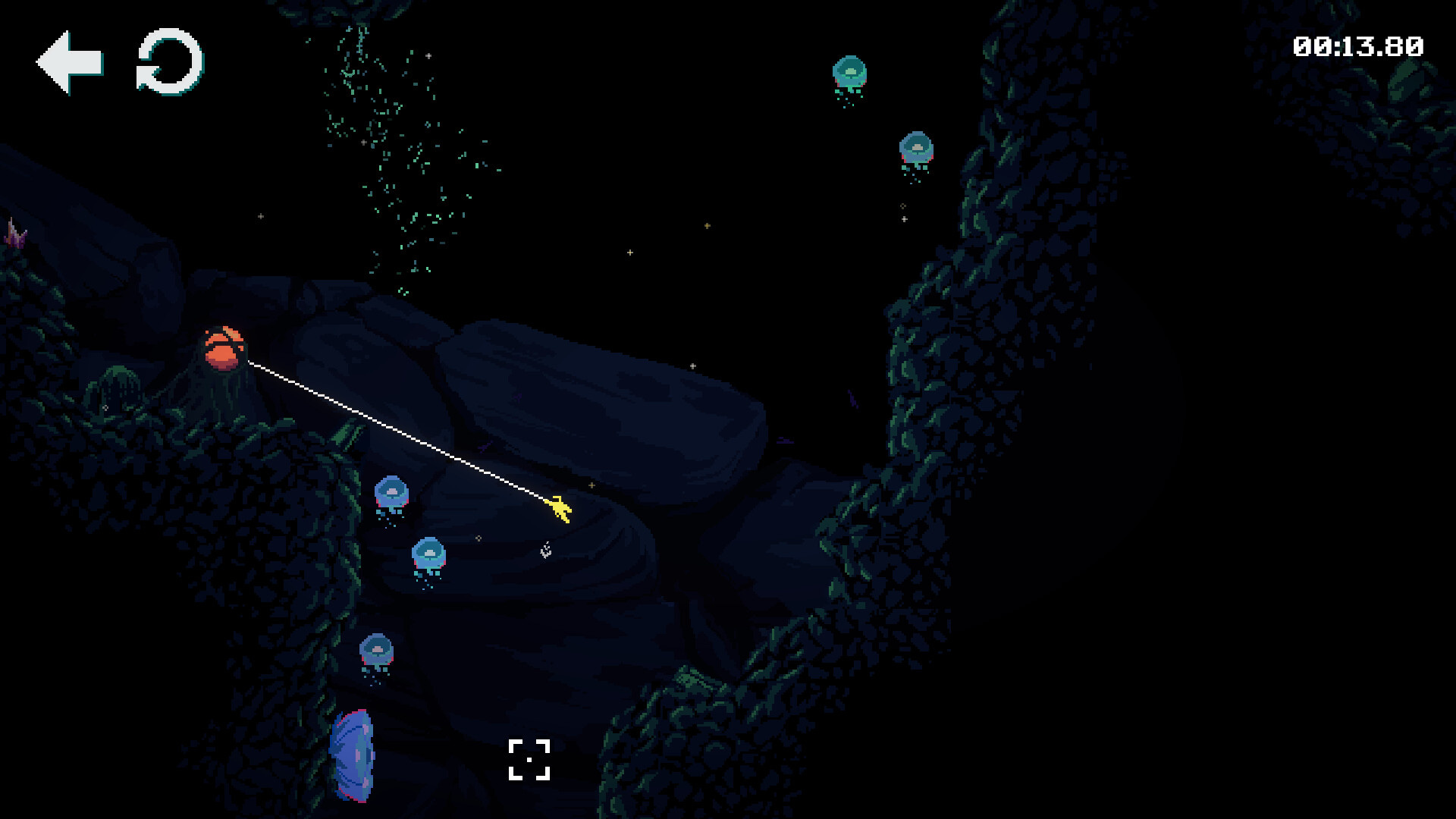
The 2D precision/parkour platformer is an extremely difficult genre to find success in. Even recent release Bionic Bay (390 reviews), which had accrued 60K wishlists and received a ton of hype on Reddit and X leading up to launch, failed to surpass 500 reviews. I would imagine this was far below publisher Kepler Interactive’s expectations. Upcoming “one-click parkour” game This Is No Cave is launching with 7.9K wishlists by comparison.
The demo for the game has been out since October 2024 and has just 13 reviews. One review highlights some problems with the art style saying: “lack of visual clarity. the rocks blend right into the background, making it hard to see exactly what’s on the screen at any given moment.” This is as much a gameplay problem as it is a marketing problem. For a game to have even a moderate chance of success in this genre, the visuals need to really pop. Jump King (4,933 reviews) is a good example of how to do this well. The environments are lush and varied and even though the character is relatively small on the screen, it’s clear that he’s a knight setting out an impossible journey to “struggle upwards in search of the Smoking Hot Babe of legend”.
This is No Cave embraces a dark and moody pixel art style that looks cohesive, but is a little hard to read at a glance. The Steam page prompts the player to “immerse yourself in hand-drawn landscapes, from the eerie depths of subterranean caves to the vibrant expanse of a lush jungle, both teeming with alien life.” The developers should certainly be proud of their hand-drawn pixel art environments, but in a fast-paced and difficult parkour game, I’m not sure many players will stop to smell the roses.
Thanks for reading and have a great week.