
Type til you die
Even Netflix can't predict its own hits
Today’s newsletter: how to tell if you have The Juice, an indie team takes a stab (and succeeds) at battle royale, even Netflix can’t predict their own hits.
Let’s get into it…
Why do some games flop? Chris Plante had a great conversation with Simon Carless about what it takes to break through in today’s game market.
Can you predict a hit? Ben Thompson points out that the massive success of K-Pop Demon Hunters was a surprise even for Netflix execs themselves. Netflix’s co-CEO explains that “[…] we had a film that people fell in love with, that’s first and foremost. But not in a huge way on the first day or even the first weekend. In fact, it was the super fans who watched the movie and repeat watched the movie that drove the recommendation engine that got it in front of more super fans who also fell in love with the movie. So that ease and value that allowed folks to repeat view it.”
Notes on horror. Ken Baumann provides a compelling breakdown on the art of horror including a note on video games: “When we consider the physical and intellectual facts of fear, we can quickly deduce the medium that best accommodates the horror artist: video games. By requiring one’s physical participation (one must move the joystick forward) and intellectual focus (one must look, listen, and solve problems), video games create the most important condition in which fear can develop: vulnerability.”
Now for the typing games I played this week. First up, S.P.L.I.T:
There’s a growing subcategory of indie games that are set within a single claustrophobic room. Among these are the escape room deckbuilding roguelike Inscryption (est. $43.3M gross), the creepy psychological horror idler Clickolding (est. $94K gross), and recent hit slot machine roguelike CloverPit (est. $9.9M gross). The originator of the mascot horror microgenre, Five Nights at Freddy’s (est. $8.6M gross), could be said to fit into this category as well—while the game technically takes place within a large Chuck E. Cheese-style arcade, the player is confined to a small office where they monitor
security feeds of the various rooms and hallways around them. Upcoming title PVKK (est. 754K wishlists) fits within the category as well with the player operating a “planetary defense cannon” inside a “cozy bunker”.
For indie teams, the appeal of this “small room” format is clear: setting a game within a single room naturally constrains your scope. If a player can’t even leave the room where they start the game then you can bypass the infamous door problem of game design entirely.
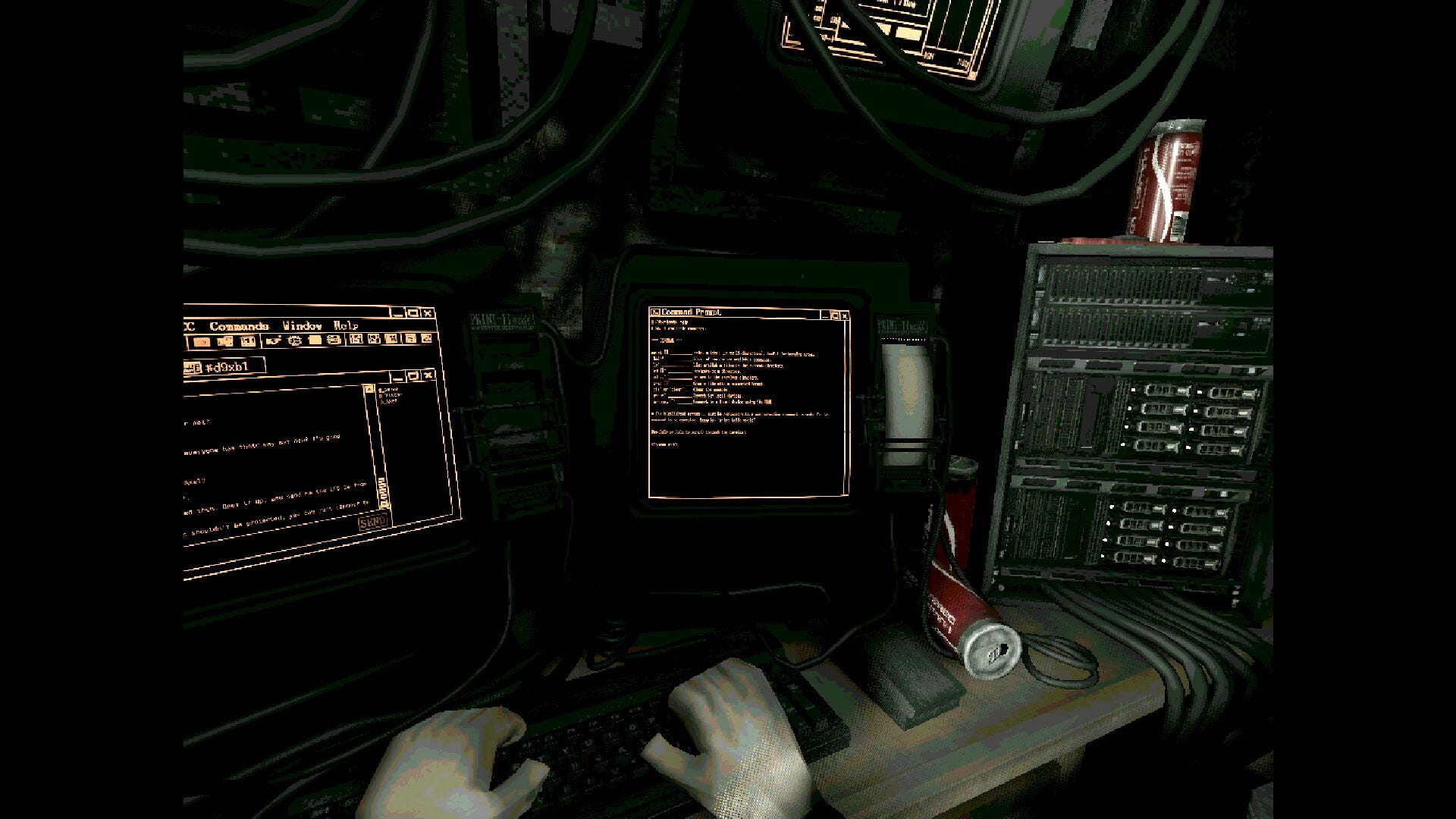
Developer Mike Klubnika has embraced this “single room” format in two of his games, first with massive hit roguelike horror Buckshot Roulette (est. $15.8 gross) and more recently with his atmospheric typing game S.P.L.I.T (est. $110K gross).
In S.P.L.I.T, your movement is limited to switching between the fixed views of some computer monitors on your desk in front of you, a small window overlooking a forest to your left, and a pelican case containing some esoteric hardware on your right. The typing mechanics include spamming random buttons to fill out pre-scripted lines of dialogue in an IRC chat room, entering actual UNIX commands to navigate a DOS-style computer interface, and typing out floating words in the air.
S.P.L.I.T is impressively economical. Like last weeks recommendation Unfair Flips, S.P.L.I.T elicits a strong sense of a drama with a very minimal set of components. 90% of the game you stare at an old CRT monitor spitting out lines and lines of fairly technically dense directory structures and commands that you must decipher. From the electro soundtrack, to the grungy visuals, and the subtle screen shake effects, the game simply has The Juice. Daniel Lyozov of Oro Interactive, who happens to be the publishing partner for S.P.L.I.T, lays it out in a recent post on X:
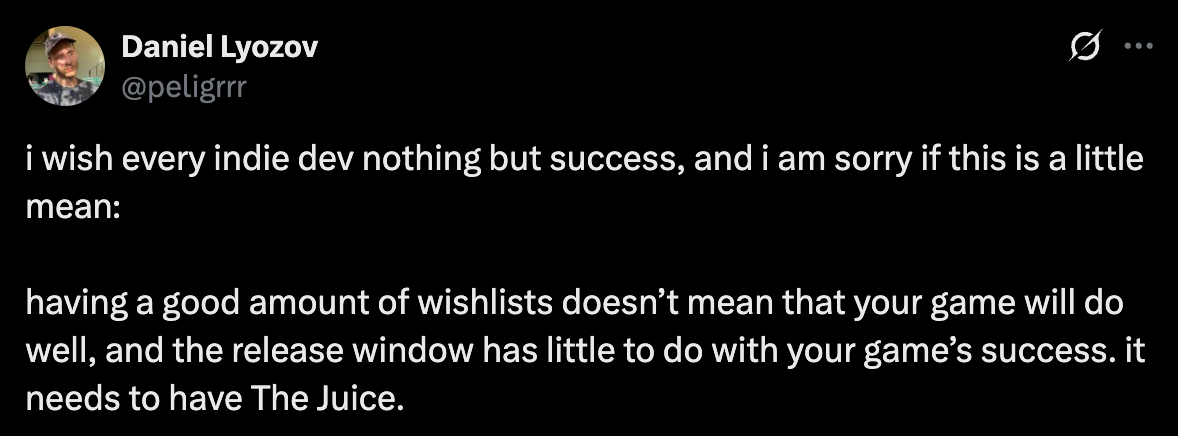
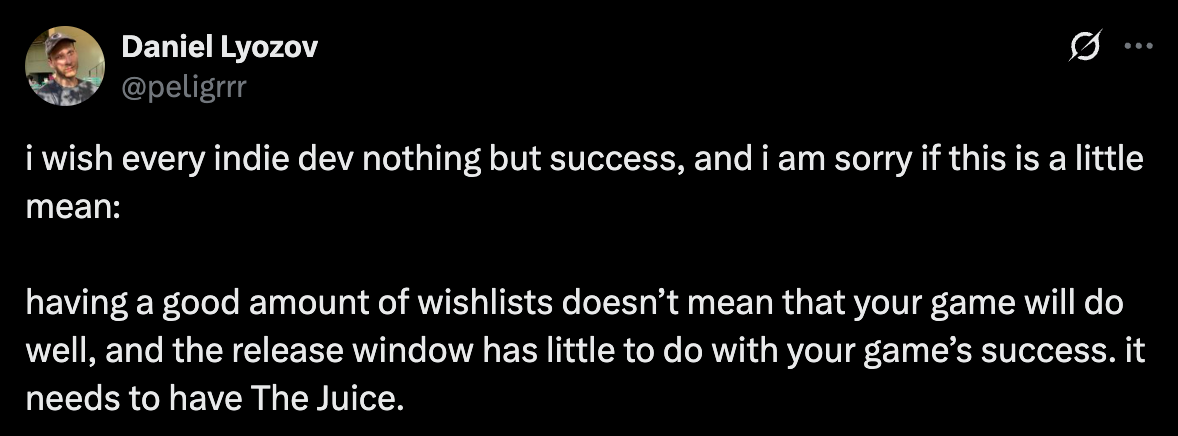
Click through for the whole thread. It’s worth a read.
And next, Final Sentence:
The battle royale genre is thought to be mostly inaccessible for indie teams due to the fact that it requires complex network code and ongoing maintenance of cloud servers to support upwards of 100 players in a single match. The early breakout hits of the genre were all AAA titles with massive budgets including PUBG, Fortnite, and Call of Duty: Black Ops 4.
In 2020, Fall Guys illustrated the potential for slightly smaller teams (35 in the case of Fall Guys) to fuse the last-man-standing format with game mechanics not derived from the first/third person shooter. Popular game engines like Unity and Unreal Engine and multiplayer cloud services like AWS GameLift and Azure PlayFab have recently enabled much smaller teams to explore the weird and wild gameplay possibilities of 100 player matches.
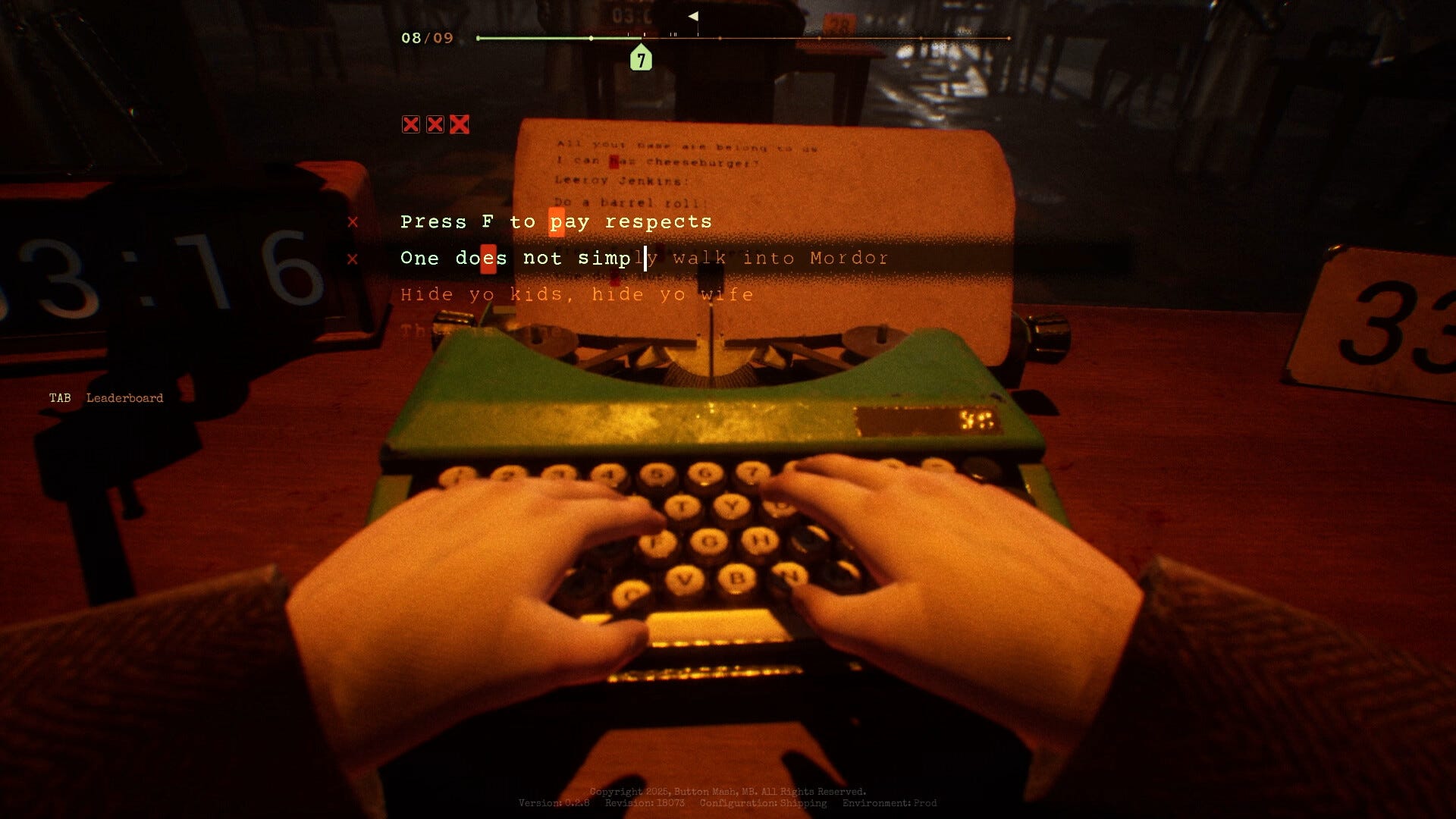
Final Sentence (est. 220K wishlists) is a battle royale typing game set to release early next year that was developed by a team of just 3 people. You sit in a large room and type out sentences on a typewriter while a masked stranger holds a gun to your head ready to pull the trigger if you make too many mistakes. If you’re the first to finish without getting shot you win the match.
As 4 player friendslop games continue to grow in popularity (see RV There Yet which released last week and has already grossed over $5M), there’s a real opportunity for more indie teams to tackle the battle royale format.
RV There Yet offers a formula for success in the friendslop microgenre that is just as applicable to future explorers of the experimental battle royale format. Strike the right mix of novelty and familiarity and execute on the fun and you’re likely to break through. A good sign is being able to describe the core appeal of your game in one short phrase: in the case of Final Sentence the game essentially sells itself with just three words “battle royal typing.”
And finally, some releases I’m keeping an eye on:
Friendslop survival horror game Mimesis (out October 27th with 340K est. wishlists) is coming to early access and looks like an interesting take on the genre with a social deduction mechanic where enemy NPCs copy your voice and movements and you must determine friends from foes.
Cut That Wire (est. $17K gross) came out last week and quickly reached over 200 reviews. It’s a bomb diffusing co-op take on the Buckshot Roulette formula.
Thanks for reading and have a great week.