
Vibe coding in the ghost kitchen
The shame and aspiration of personal software
With the introduction of fire came cooking. With the introduction of ZIRP came Blue Apron.
You could probably teach a whole economics course on the post-recession 2010s just by studying the meal kit delivery startup. The company epitomizes the rise and fall of the venture-subsidized downwardly-mobile millennial lifestyle that defined the era. Over the course of 11 years Blue Apron went from a peak valuation of $2 billion, to a failed IPO and tanking stock price, to a pennies on the dollar sale to Wonder, a company best known for running ghost kitchens.
Blue Apron’s vision, making home cooking accessible for the “busy person,” hinged on a mixture of shame and aspiration. Their target customer was the aging millennial knowledge worker who had just enough disposable income to buy meals on a monthly subscription service, but not enough time or motivation to imagine what they might eat for dinner. The Blue Apron customer frowns upon their counterpart, the frequent Doordasher. They instead aspire to be the type of person who makes their own meals at home. But they haven’t quite figured out the how, let alone the grocery shopping bit. So they play pretend, open up the individually packaged herbs and vegetables, follow every step on the carefully designed recipe pamphlet, simulating the feeling of cooking a meal.
The whole experience of receiving a meal kit in a box at your doorstep is a little uncanny. Just look at the text printed on the polymer gel ice packs that sit at the bottom of the box keeping the ingredients cold in transit. It instructs customers to:
CLEAN AND DRY: Empty non-toxic contents into trash and dry.
SET ASIDE: Don’t recycle me with your curbside items!
RECYCLE: Visit www.plasticfilmrecycling.org for drop-off locations.
So the Blue Apron customer, who is supposedly too busy to go grocery shopping, is expected to drop off their Blue Apron trash at a dedicated recycling center? To be a Blue Apron customer is to be conflicted, to feel simultaneously ashamed and aspirational. But the Blue Apron customer can only sit with this tension for so long. They’d eventually churn up (seek out better recipes and cheaper groceries in bulk) or churn down (open up DoorDash and receive a fully cooked meal at their doorstep without having to worry about all those dishes).
It’s fitting that Blue Apron is destined to live out the rest of its days in the shadow of a ghost kitchen.
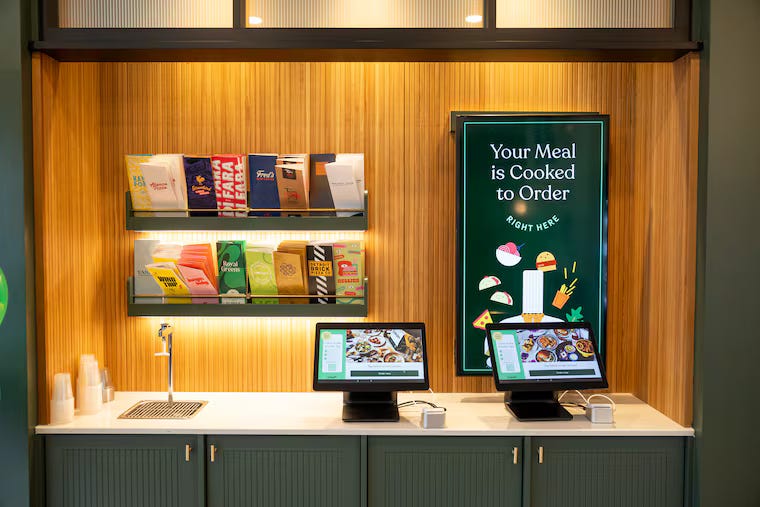
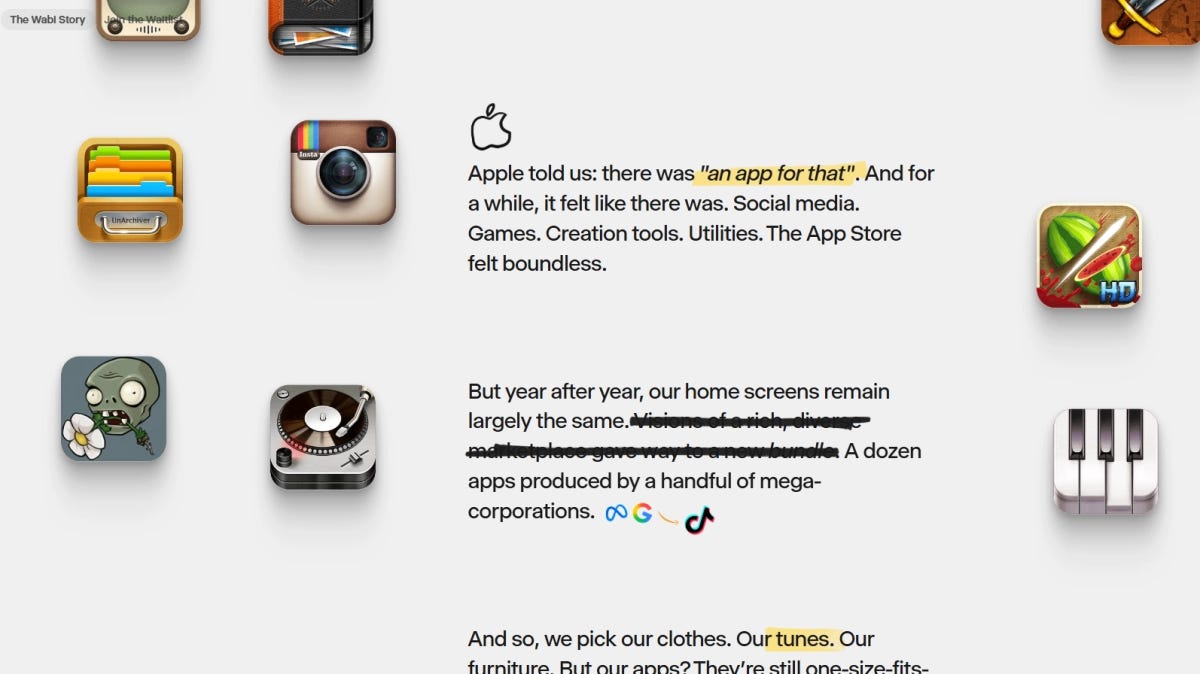
With the end of the ZIRP era and the beginning of the age of the hyperscaler, you’d be forgiven for thinking this cycle will be different. But there’s a new generation of startups with visions of the future eerily similar to that of Blue Apron. A vision where the past is celebrated, the status quo of the present is rejected, and the future is found within the walls of a garden built by the latest startup selling you the life you aspire to. Among those is Wabi, a “personal software platform” that raised $20 million in November last year and has yet to launch out of beta. Wabi’s homepage describes their vision:
Many years ago Apple told us: there was “an app for that”. And for a while, it felt like there was. Social media. Games. Creation tools. Utilities. The App Store felt boundless.
But year after year, our home screens remain largely the same. Visions of a rich, diverse marketplace gave way to a new bundle. A dozen apps produced by a handful of mega- corporations.
And so, we pick our clothes. Our tunes. Our furniture. But our apps? They’re still one-size-fits-all. Made for billions. Not for us.
Just as Blue Apron sold the feeling of being someone who cooks without requiring you to actually become that person, Wabi sells the feeling of being someone with taste and agency (Silicon Valley’s favorite new words). The Wabi user apparently has problems that are far too bespoke to be solved by mass market solutions. Wabi envisions its users as too good for TikTok, but too busy to roll their own software. Wabi is the Easy-Bake Oven of software. The problem is, as Jasmine Sun explained in a recent essay on vibe coding1, most people’s problems are not software-shaped:
If you tell a friend they can now instantly create any app, they’ll probably say “Cool! Now I need to think of an idea.” Then they will forget about it, and never build a thing. The problem is not that your friend is horribly uncreative. It’s that most people’s problems are not software-shaped, and most won’t notice even when they are.
The companies that will struggle in this cycle are the ones occupying the same uncomfortable middle ground Blue Apron did: too aspirational to solve real problems, too shallow to deliver on the aspiration. Their customers will eventually churn up or churn down, and these companies will join the rest of the midwits in the ghost kitchen.
Read this Paul Ford article for a good primer on the topic